


In an increasingly competitive commercial landscape, a trademark is more than just a logo or a name—it is the embodiment of a company’s goodwill and reputation. For businesses operating in or entering the Pakistani market, understanding the nuances of trademark protection is critical.
Pakistan operates under a “first-to-use” rather than a strict “first-to-file” system. Under the Trademarks Ordinance, 2001, the rights belong to the party that first uses the mark in commerce, regardless of registration status . However, registration with the Intellectual Property Organization of Pakistan (IPO-Pakistan) provides statutory exclusivity and serves as prima facie evidence of ownership, making enforcement significantly easier in court .
Here is a comprehensive guide to the trademark registration process, costs, and legal framework in Pakistan as of 2026.
1. The Legal Framework and Digital Shift
The registration of trademarks is governed by the Trademarks Ordinance, 2001, and the Trademarks Rules, 2004. The administrative authority is IPO-Pakistan, which operates its principal registry in Karachi and branch offices in Lahore, Peshawar, and Islamabad .
Recent Developments: As of mid-2026, IPO-Pakistan is undergoing a significant digital transformation. The office has launched a six-month plan to introduce AI tools and an online complaint system, moving away from traditional paper-based procedures to cut delays and improve transparency .
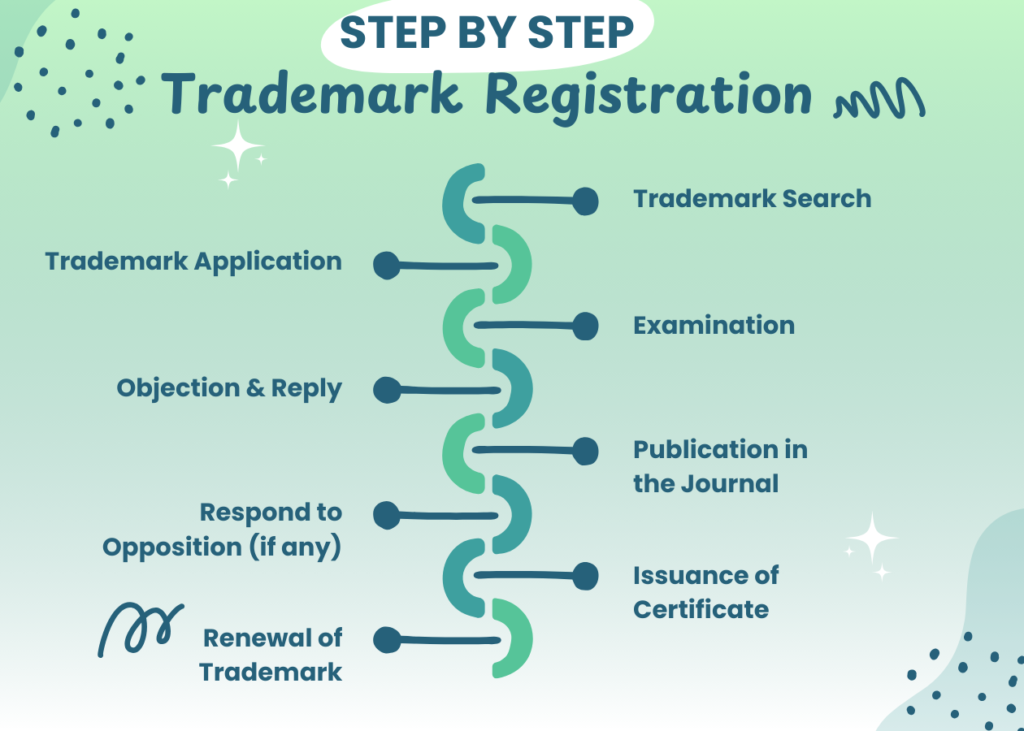
2. Step-by-Step Registration Process
While the entire process typically takes 12 to 24 months (depending on objections or oppositions), it follows a structured legal pathway .
Step 1: Pre-filing Search (Optional but Recommended)
Before filing, applicants can request an official search using Form TM-55. The fee is 1,000 PKR per class per mark. While the official trademark register is not fully available online for public search, it can be physically inspected at IPO offices .
- Note: IPO also offers a “Personal Search Facility” for 200 PKR per 15 minutes at their physical locations .
Step 2: Filing the Application
Pakistan does not accept multi-class applications. A separate application must be filed for each class of goods or services according to the Nice Classification .
- Form: TM-1 (in duplicate).
- Filing Fee: Approximately 3,000 PKR per class .
- Requirements: Applicant’s name, address, nationality, six representations of the mark, and a Power of Attorney (Form TM-48) if filed through an agent .
Step 3: Examination
Approximately three months after filing, the Registrar issues an examination report.
- If the mark is deemed non-distinctive or conflicts with an existing registered mark, a Show Cause Notice is issued.
- The applicant must respond within two months .
Step 4: Publication and Opposition
If the application clears examination (or overcomes objections), it is published in the Trademarks Journal.
- Opposition Period: Third parties have two months from the publication date to file an opposition using Form TM-5 .
- Procedure: If opposed, the applicant must file a counter-statement (Form TM-6) within one month, failing which the application is abandoned. The opposition proceeds through evidence stages and potentially a hearing .
Step 5: Registration
If no opposition is filed, or the opposition is resolved in the applicant’s favor, the Registrar issues a Demand Notice.
- Registration Fee: 9,000 PKR (Form TM-11) .
- Certificate: Upon payment, the registration certificate is issued.
3. Grounds for Refusal
The Registrar will refuse registration based on absolute grounds defined in the Ordinance, including:
- Marks devoid of distinctive character.
- Marks that describe the kind, quality, or intended purpose of the goods.
- Marks that are likely to deceive the public or contain scandalous matter .
Note: A mark that is inherently non-distinctive can still be registered if it has acquired distinctiveness through use prior to the application date .
4. Duration and Renewal
A registered trademark in Pakistan is valid for ten years from the application filing date .
- Renewal: Renewable indefinitely for successive ten-year periods.
- Grace Period: If renewal is missed, a six-month grace period is available with late fees.
- Removal: If not renewed within the grace period, the mark is removed from the register. However, an application for restoration (Form TM-13) can be filed .
- Non-Use: A registered mark is vulnerable to removal if it has not been used in Pakistan for a continuous period of five years and three months prior to the filing of a removal application .
5. Enforcement and Infringement
Registration grants the owner exclusive rights. Under Section 39 of the Ordinance, unauthorized use of a registered mark constitutes infringement .
Remedies available to owners include:
- Civil: Suits for injunction, damages, and account of profits before specialized Intellectual Property Tribunals.
- Criminal: Raids and arrests for counterfeiting.
- Border Measures: Recordal with Pakistan Customs to stop the importation of infringing goods .
With IPO-Pakistan’s new digital complaint system, rights holders can now electronically file complaints and track enforcement cases without repeated physical visits to government offices .
Strategic Takeaway
While unregistered trademark registration rights exist in Pakistan through “passing off” actions, the difficulty of proving prior use and goodwill in litigation makes registration a strategic necessity. Given the single-class filing requirement and the strict deadlines during opposition proceedings (e.g., only 2 months to file counter-statements), engaging a local intellectual property attorney is strongly advised to navigate the process efficiently
