


In the bustling commercial hub of Karachi, where thousands of new businesses emerge every year, a brand is often a company’s most valuable asset. From the aromatic biryani stalls of Burns Road to the corporate offices in Clifton, a unique logo, name, or slogan distinguishes a business from its competitors.
However, without legal protection, your brand identity is vulnerable to imitation. Trademark registration is no longer a legal formality reserved for multinational corporations; it is a critical business strategy for any enterprise operating in Pakistan’s largest city .
Here is everything you need to know about registering a trademark in Karachi.
Why Karachi Businesses Must Register Their Trademarks
Karachi is the economic engine of Pakistan, but its density also makes it a hotspot for brand infringement and “passing off” (using a similar name to confuse customers). While common law rights can offer some protection, they are difficult to enforce without official registration .
Registering your trademark provides three distinct advantages:
- Legal Ownership: It grants the exclusive right to use the mark across Pakistan.
- Protection: It allows you to sue infringers in court and stop them from using your brand.
- Asset Value: A registered trademark is an intangible asset that can be sold, franchised, or licensed .
The Government Body: Where to Go in Karachi
The epicenter of intellectual property in Pakistan is the Trade Marks Registry (TMR) , located in Karachi. This office operates under the Intellectual Property Organisation of Pakistan (IPO-Pakistan) .
- Location: The registry is situated behind the KDA Civic Center, Gulshan-e-Iqbal .
- Jurisdiction: While you can file applications in Lahore or Islamabad, the primary registry and the office of the Registrar are based in Karachi. The TMR functions similarly to a civil court, meaning its decisions can be appealed in the High Court of Sindh .
Step-by-Step Registration Process
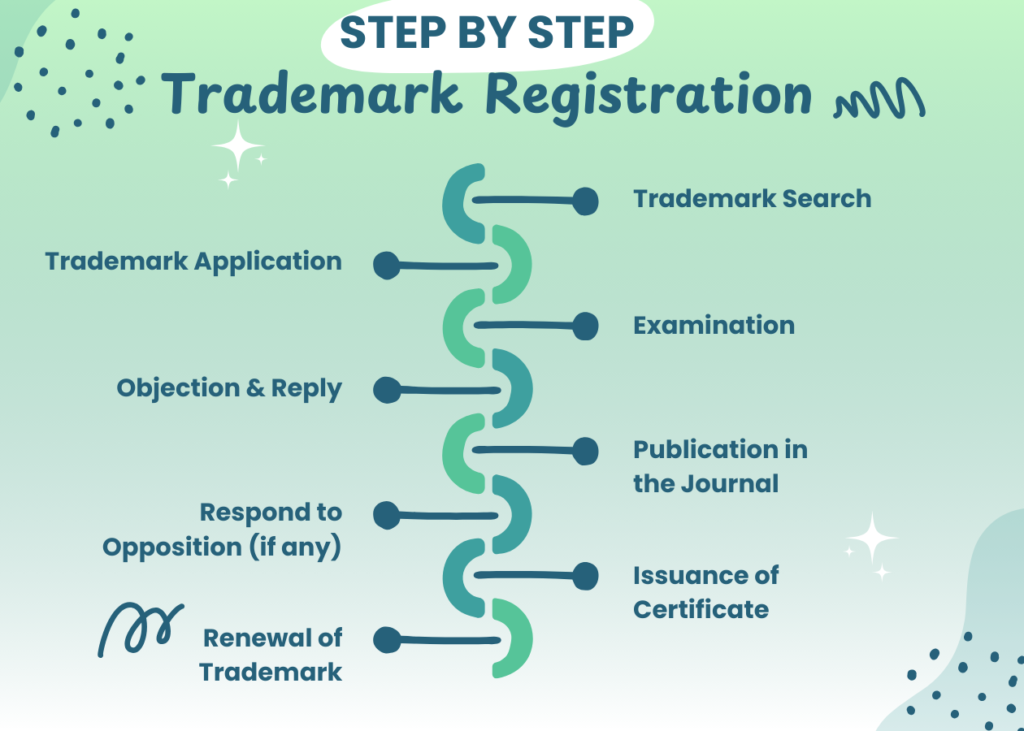
The process of registering a trademark in Pakistan generally follows a structured path, typically taking between 6 to 24 months depending on objections or opposition .
Step 1: The Search (Form TM-55)
Before filing an application, it is highly advisable to conduct a trademark search. This determines whether a similar or identical mark already exists in your class of goods or services.
- How to do it: File Form TM-55 with a government fee of Rs. 1,000 per class. You can also hire a local attorney to conduct a more thorough search .
Step 2: Filing the Application (Form TM-1/TM-2)
Once the search is clear, you file the application. The required documents include:
- Form TM-1: (For marks already in use) or TM-2 (for proposed marks).
- Specimens: Eight clear reproductions of the logo or mark.
- Power of Attorney: Form TM-48, signed and notarized, if using a lawyer .
- Government Fee: A pay order or bank draft of Rs. 2,000 per class (cash is not accepted by the registry) .
Step 3: Examination and Publication
The Registrar examines the application. If approved, the trademark is published in the Trade Marks Journal.
- Opposition Period: Once published, the public has 60 days to oppose the registration . If an opposition is filed, legal proceedings begin, which can delay registration significantly .
Step 4: Certification
If there is no opposition or if you win the opposition case, the registrar issues a demand notice for the registration fee. Upon payment, a registration certificate is issued.
Costs Involved
The cost of trademark registration in Karachi varies based on whether you hire legal counsel.
- Official Government Fees: Approximately Rs. 2,000 – 3,000 per application per class.
- Professional Fees: If you hire a trademark attorney or agent (highly recommended), total costs typically range from Rs. 50,000 to Rs. 100,000, covering search reports, drafting, and filing.
Validity and Renewal
A registered trademark in Pakistan is valid for 10 years from the date of filing.
- Renewal: You can renew the trademark indefinitely for subsequent 10-year periods.
- Grace Period: If you miss the renewal deadline, there is a grace period, but failure to renew results in the mark being removed from the register.
Legal Landscape: Recent Updates
It is important to note that Pakistan is modernizing its IP framework. The Trade Marks Ordinance, 2001 (amended in 2023) governs the process, and the IPO has recently introduced online filing systems to streamline applications in Karachi and beyond.
Additionally, Pakistan is a signatory to the Paris Convention and the Madrid Protocol. This means that if you register a trademark in Karachi, you can potentially seek protection in other member countries and vice versa, making it easier for global brands to protect their assets locally.
Conclusion
For a business owner in Karachi, a trademark is the signature of trust and quality. While the process requires patience—navigating the formalities of the Trademarks Registry in Gulshan-e-Iqbal—the legal protection and business value gained are invaluable.
